During the Army Family of Counter-UAS Systems (FoCUS) evaluation, associated with DEVCOM C5ISR Center, Blind Tiger Communications demonstrated Drone Rupture performing its complete cellular protection mission within an integrated counter-UAS defense architecture.
Autonomous discovery · Continuous ranging · Partner-integrated C2 · Operator-directed containment
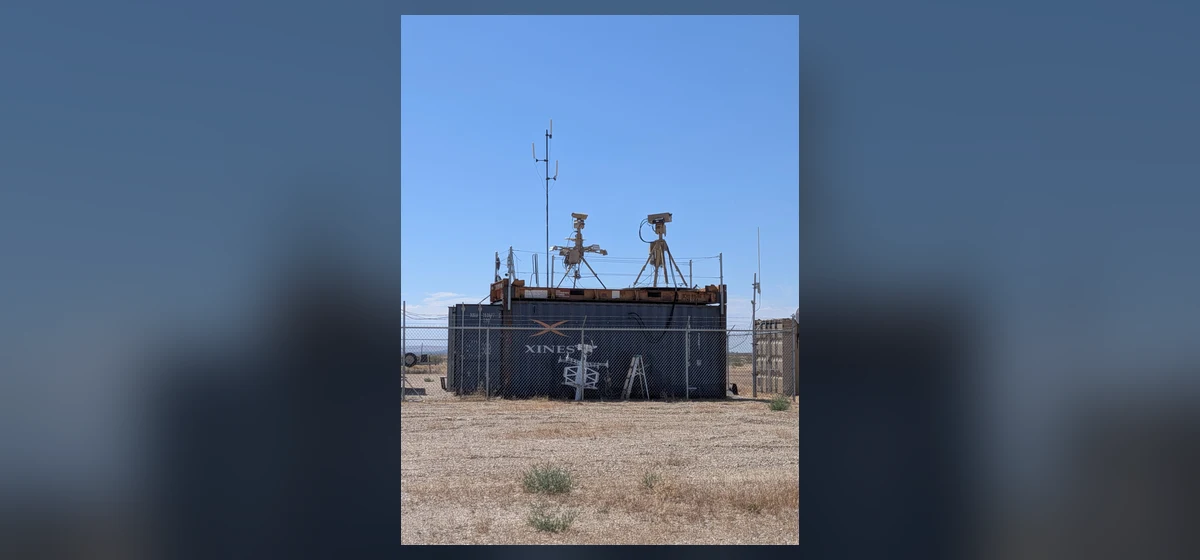
Drone Rupture was deployed into an unfamiliar cellular environment as a production-representative operational system. Periscope autonomously surveyed surrounding commercial networks and generated an RF Blueprint. Drone Rupture used that intelligence to configure its managed-access cellular infrastructure without requiring an on-site cellular subject-matter expert.
The system then engaged an approaching cellular-connected drone, induced its transition from the incumbent network into the controlled managed-access environment, and continuously estimated its distance and movement.
Throughout the engagement, Drone Rupture sent continuous SAPIENT-formatted telemetry to an integration partner. The partner relayed that information into the Lattice command-and-control environment, where government operators observed the approaching drone and its changing range on a large C2 display.
This was a partner-mediated integration into Lattice, not a claim of direct native Lattice connectivity by Blind Tiger.
When the government operator selected the mitigation command, Drone Rupture executed selective cellular containment. Following that action, the targeted device ceased communicating. The observed result was communications containment—not a claim of physical destruction or a verified drone crash.
The FoCUS demonstration exercised the complete mission sequence: autonomous RF discovery, RF Blueprint-driven configuration, active device transition, continuous cellular ranging, real-time C2 reporting through a partner, and operator-directed selective mitigation. Drone Rupture performed its intended functions as an integrated cellular protection system rather than as a collection of isolated laboratory capabilities.
The government evaluation team provided positive feedback. The demonstration illustrated how a specialized cellular intelligence and control layer can operate within an established defense architecture while keeping the engagement decision under government operator authority.
← Back to Latest News & Field Programs